
There’s a reason the global noodles market is projected to grow from $65.19 billion in 2025 to over $102 billion by 2034 (MarketDataForecast, 2025) — the world can’t stop craving a deeply comforting bowl of noodle soup. Satay beef noodle soup — a staple of Hong Kong-style cafés and Vietnamese kitchens since the 1950s — brings together tender marinated beef, silky rice vermicelli, and a peanut-satay broth that balances savory, sweet, tangy, and gently spicy flavors in every spoonful.
This step-by-step guide walks you through every stage: the Cantonese velveting marinade that makes the beef restaurant-tender, a from-scratch satay sauce, a quick satay-infused broth, and assembly that takes under 5 minutes. Total time: 40 minutes. Serves 4.
Key Takeaways
- The global noodles market was valued at $65.19 billion in 2025 (MarketDataForecast, 2025), reflecting worldwide demand for noodle dishes.
- Satay beef noodle soup originates from 1950s South Vietnam and Hong Kong, where Chaozhou immigrants introduced their distinct satay sauce style.
- The velveting marinade (baking soda + cornstarch + soy sauce) is the single most important step for tender, restaurant-quality beef.
- Total cook time: 40 minutes (20 min prep + 20 min cook). Serves 4.
What Makes Satay Beef Noodle Soup So Special?
In 2026, Asian cuisine continues to dominate global food trend reports, with Asia Pacific accounting for approximately 55.7% of the global noodle market (MarketDataForecast, 2025). Satay beef noodle soup sits at the intersection of two powerful flavor traditions: the Vietnamese hủ tiếu noodle culture and the Chaozhou-influenced Hong Kong café scene.
The dish got its start in the 1950s. In South Vietnam, cooks in Ho Chi Minh City developed Hủ Tiếu Sa Tế Bò, a noodle soup featuring bold satay-spiced broth and tender beef. Meanwhile in Hong Kong, Chaozhou immigrants — who had brought their own version of satay sauce from Southeast Asia — began serving their satay beef over noodles in the city’s first cha chaan tengs. Two culinary traditions, one extraordinary dish.
Our finding: What separates an exceptional bowl from a mediocre one isn’t the broth — it’s the marinade. The Cantonese velveting technique (baking soda + cornstarch) breaks down muscle fibers so the beef practically melts on your tongue. Most home cooks skip this step. Don’t.
Ingredients You’ll Need
The ingredient list divides into four sections: the velveting marinade, the satay sauce, the broth, and the bowl assembly. Each section has a specific job in the final flavor profile.
Beef Marinade (Velveting)
- 500g flank steak or beef brisket, thinly sliced
- 1 tsp baking soda
- 2 tbsp soy sauce
- 1 tbsp cornstarch
- 1 tbsp neutral oil
- 1 tsp sesame oil
Satay Sauce
- 3 tbsp smooth peanut butter
- 2 stalks lemongrass, white part, minced
- 3 cloves garlic, minced
- 2 shallots, minced
- 2 dried red chilies
- 2 tbsp coconut milk
- 1 tbsp tamarind paste
- 1 tsp sugar
- 2 tbsp neutral oil
Broth & Bowl
- 2.5 l (10 cups) chicken or beef broth
- 1 tbsp fish sauce + 1 tsp soy sauce
- 500g thin rice vermicelli
- 4 cups bean sprouts
- Spring onions, cilantro, red chili, lime wedges
Step 1: Marinate the Beef for Maximum Tenderness
Velveting is the secret weapon of Cantonese cooking. The alkaline baking soda raises the pH on the beef’s surface, inhibiting protein over-tightening during high heat. Freeze your beef 45–60 minutes first, then slice paper-thin (3mm) against the grain at a 45-degree angle. Combine baking soda, soy sauce, cornstarch, and both oils; toss the beef to coat and rest for at least 15–20 minutes. The slices should feel slightly tacky and look glossy when ready.
Step 2: Make the Satay Sauce From Scratch
Satay sauce is built on aromatics first. Blend lemongrass, garlic, shallots, and dried chilies to a rough paste. Fry in oil for 4–5 minutes until fragrant and golden — this is the Malay technique of cooking until the “oil splits.” Add peanut butter (stir 1 minute), then coconut milk, tamarind, and sugar. The finished sauce should be smooth, glossy, and rich amber. Reserve 2 tbsp for the broth; use the rest for topping the beef.
According to Nomadette’s authentic satay guide, the sauce is “a little sweet, a little tangy, a little spicy — nothing overpowering, nothing cloying.” That balance is the hallmark of a properly made satay sauce.
Step 3: Build the Satay Broth
Bring 10 cups of broth to a simmer, whisk in 2 tbsp satay sauce, and season with fish sauce, soy sauce, white pepper, and salt. Simmer 5 minutes. The broth should be golden amber with a light peanut shimmer. If it tastes flat, add fish sauce in 1-tsp increments — this is the single most common seasoning mistake home cooks make.
Step 4: Cook the Noodles and Sear the Beef
Noodles: Boil rice vermicelli 2–3 minutes; test at 2 minutes. Drain and rinse immediately with cold water. Divide among 4 bowls.
Beef: Smoke-hot wok, 1 tbsp oil, beef in a single layer (cook in batches). Sear 2 minutes without stirring, toss 1–2 minutes until just cooked. Add 2–3 tbsp satay sauce, toss 30 seconds. Crowding the wok is the most common mistake — it drops temperature and steams rather than sears the beef.
Step 5: Assemble the Bowl
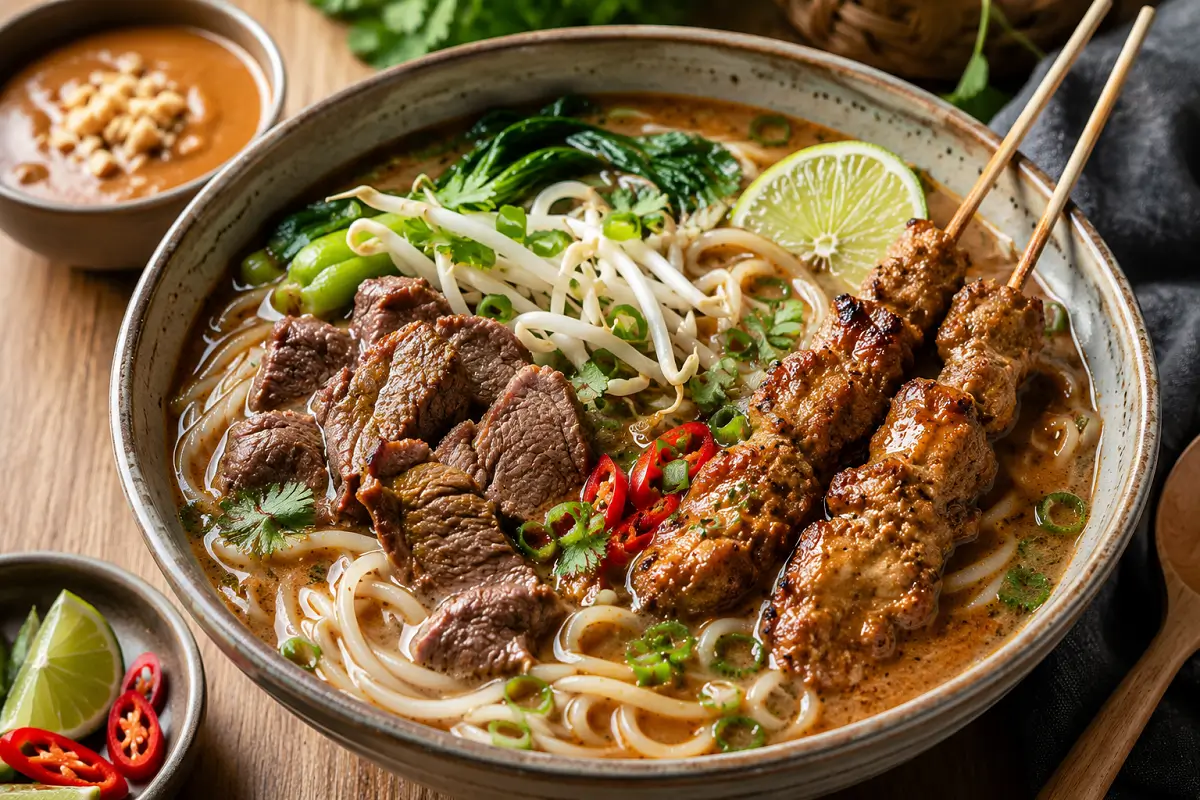
Layer in order: noodles → bean sprouts → hot satay broth (2–2.5 cups) → satay-glazed beef on top → spring onions, cilantro, red chili. Serve immediately with a lime wedge. The broth temperature drops fast — don’t let it sit.
Common Mistakes to Avoid
- Skipping baking soda — The beef turns chewy without it. Always include 1 tsp per 500g.
- Overcooking the vermicelli — Rice noodles go from perfect to mushy in 60 seconds. Test early and rinse immediately.
- Under-seasoning the broth — Fish sauce is essential for umami depth. Soy sauce alone isn’t enough.
- Crowding the wok — Cook beef in two batches for proper caramelized sear.
Frequently Asked Questions
What noodles work best for satay beef noodle soup?
Thin rice vermicelli is the most traditional choice for both Vietnamese and Hong Kong-style versions. Flat rice noodles (bánh phở) or egg noodles work as substitutes. Avoid thick udon noodles — they absorb the broth and dilute the satay flavor.
Can I make this without peanut butter?
Yes. Use finely ground roasted peanuts (4 tbsp) for a more textured sauce, or sunflower seed butter as a nut-free alternative. Tahini also works but shifts the flavor toward sesame rather than traditional peanut.
How do I store leftovers?
Store broth, noodles, and beef separately. Broth keeps 4 days refrigerated; beef keeps 3 days. Never store cooked noodles in broth — they swell and become bloated. Reheat broth separately and pour over freshly rinsed noodles.
Is this dish gluten-free?
It can be. Use tamari instead of soy sauce, verify your fish sauce is gluten-free, and confirm your rice vermicelli contains no wheat additives. The homemade satay sauce is naturally gluten-free.
How long does the satay sauce last?
Homemade satay sauce keeps refrigerated for up to 5 days and frozen for up to 2 months. Making a double batch effectively halves your active cooking time on future bowls.
Conclusion
With a global noodles market valued at over $65 billion in 2025 and still growing at 5.15% annually (MarketDataForecast, 2025), the world’s love affair with noodle soups shows no signs of slowing. Satay beef noodle soup earns its place in that tradition — rich, fragrant, satisfying, and absolutely achievable at home in 40 minutes.
- How to Make Roasted Vegetable Soup: The Ultimate 2026 Recipe Guide
- Beef Sinigang: What Makes It the World’s #1 Comfort Soup?
Try this recipe and let us know how your bowl turned out in the comments below.
 AuthorEmma food bloggerDifficultyIntermediate
A rich, fragrant bowl of Hong Kong-style satay beef noodle soup with tender velveted beef, silky rice vermicelli, and a complex peanut-satay broth ready in just 40 minutes.
Freeze the beef for 45–60 minutes until slightly firm, then slice paper-thin (3mm) against the grain at a 45-degree angle. In a bowl, combine baking soda, soy sauce, cornstarch, neutral oil, and sesame oil. Toss the beef slices to coat evenly. Rest for at least 15–20 minutes (up to 1 hour refrigerated).
Blend lemongrass, garlic, shallots, and dried chilies in a food processor to a rough paste. Heat 2 tbsp oil in a wok over medium heat. Fry the paste for 4–5 minutes, stirring constantly, until fragrant and golden. Add peanut butter and stir for 1 minute. Add coconut milk, tamarind, and sugar. Stir until smooth and glossy. Reserve 2 tbsp for the broth; keep the rest for topping.
Bring the broth to a simmer in a large soup pot over medium-high heat. Whisk in 2 tablespoons of satay sauce. Add fish sauce, soy sauce, white pepper, and salt to taste. Simmer for 5 minutes to allow flavors to meld. The broth should be golden amber, savory, and lightly nutty. Adjust seasoning as needed.
Bring a separate pot of water to a boil. Add rice vermicelli and cook for 2–3 minutes, testing at 2 minutes. Drain immediately and rinse under cold water to stop cooking and prevent clumping. Divide noodles evenly among 4 serving bowls.
Heat a wok over high heat until smoking. Add 1 tbsp oil, then lay marinated beef in a single layer (cook in batches — do not crowd). Sear 2 minutes without stirring, then toss for 1–2 minutes until just cooked through. Add 2–3 tbsp satay sauce directly to the wok. Toss to coat for 30 seconds and remove from heat.
Add a handful of bean sprouts over the noodles in each bowl. Ladle 2–2.5 cups of hot satay broth over the noodles and sprouts. Arrange the satay-glazed beef on top. Garnish with spring onions, fresh cilantro, and sliced red chili. Serve immediately with a lime wedge on the side.
4 servings
1 bowl (approx. 550g)
- Amount per serving
- Calories520
- % Daily Value *
- Total Fat 18g24%
- Saturated Fat 5g25%
- Trans Fat 0g
- Monounsaturated Fat 8g
- Polyunsaturated Fat 4g
- Cholesterol 75mg25%
- Sodium 1100mg48%
- Total Carbohydrate 55g20%
- Dietary Fiber 3g11%
- Total Sugars 6g
- Includes 2g Added Sugars4%
- Protein 32g
- Potassium 620mg14%
* The % Daily Value (DV) tells you how much a nutrient in a serving of food contributes to a daily diet. 2,000 calories a day is used for general nutrition advice.