

There’s a bowl of soup that has made home cooks weep with nostalgia on every continent — and it comes from the Philippines. In 2021, TasteAtlas named sinigang the world’s greatest soup with a rating of 4.63 out of 5 stars, beating Japanese ramen and Romanian ciorbă in a global competition spanning thousands of dishes. Yet outside Southeast Asia, it’s still the best-kept secret in the culinary world.
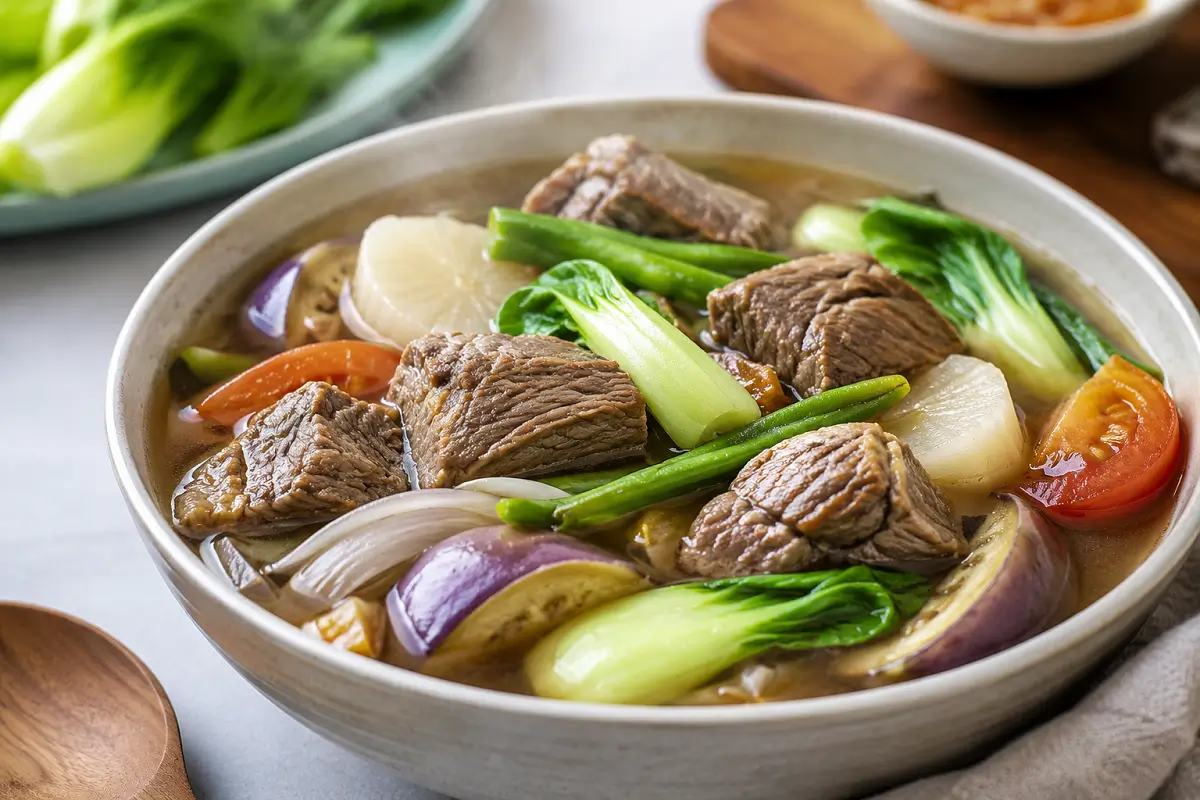
Beef sinigang — sinigang na baka — is a tamarind-based broth loaded with tender beef, crisp vegetables, and an addictive balance of sour, savory, and umami flavors. It’s weeknight dinner and Sunday feast at the same time. This guide gives you everything: the history, the full recipe, the science behind tamarind’s health benefits, and the tips that separate a forgettable pot from an unforgettable one.
Key Takeaways
- In 2021, TasteAtlas rated sinigang the world’s #1 soup at 4.63/5, beating ramen and Romanian ciorbă (CNN Philippines, 2022).
- Tamarind contains flavonoids and tannins with confirmed cardioprotective and anti-inflammatory effects (PMC, Feb 2026).
- Comfort food ranked as the #1 quality consumers sought in food in 2025 (IFT Food Technology, Dec 2024).
- The recipe takes 90 minutes and requires just one pot.
What Is Beef Sinigang and Why Did It Win the World’s Best Soup?
In 2021, TasteAtlas awarded sinigang a rating of 4.63 out of 5 — beating Romania’s Ciorbă de fasole cu afumătură (4.55) and Japan’s Shoyu Ramen (4.54) to claim the top spot among the world’s best soups (CNN Philippines, 2022). It won again the following year, making it a back-to-back champion.

Sinigang traces its roots back centuries in Philippine cooking, built around the concept of souring — using native fruits like tamarind (sampalok), kamias, unripe mango, or calamansi to create a broth with a distinctive tartness. The beef version uses bone-in short ribs or shank that turn buttery-soft after low, slow simmering. The vegetables — kangkong, eggplant, radish, string beans, and tomatoes — are added in the last minutes to keep their color and bite.
According to TasteAtlas, sinigang earned its top rating twice in a row — 2021 and 2022 — based on verified user reviews from food enthusiasts worldwide. This isn’t regional bias or a viral moment. It’s a consistent crowd-sourced verdict from a global food database covering over 10,000 traditional dishes.
Beef Sinigang Recipe
Below is the complete recipe card with all ingredients and step-by-step directions. This serves 4-6 people and takes about 90 minutes total.
 AuthorEmma food bloggerDifficultyBeginner
A classic Filipino tamarind-based soup with tender beef, radish, eggplant, string beans, and kangkong — named the world's best soup by TasteAtlas 2021.
If using fresh tamarind pods, boil them in 2 cups of water for 10 minutes until the pulp softens. Press through a sieve, discarding seeds and fibers, and reserve the liquid. If using paste, dissolve 3 tablespoons in half a cup of warm water and set aside.
In a large pot over medium-high heat, add a thin film of oil. Season beef pieces generously with salt and pepper. Sear in batches for 2-3 minutes per side until a golden-brown crust forms. Do not crowd the pot. Remove and set aside.
In the same pot, add onions and tomatoes. Saute for 3-4 minutes, pressing the tomatoes down gently to release their juice. This builds a savory base that rounds out the tamarind acidity.
Return the seared beef to the pot. Pour in 1.5 liters of water and the tamarind liquid. Bring to a boil, skim any foam from the surface, then reduce to a gentle simmer. Cover and cook for 55-60 minutes until the beef is tender.
Add fish sauce, starting with 2 tablespoons. Taste and adjust — the broth should be pleasantly sour, savory, and slightly salty. Add the whole finger chilies for fragrance without intense heat.
Add daikon radish and simmer 5 minutes. Add eggplant and string beans, simmer 4 minutes. Add kangkong stems, simmer 2 minutes. Add kangkong leaves, turn off heat, stir, and cover for 1 minute.
Ladle into deep bowls. Serve with steamed white rice and a small dish of fish sauce with sliced chilies on the side for dipping the beef.
4 servings
Ingredients
Why Is Tamarind the Secret Weapon of Beef Sinigang Recipe?
In February 2026, a peer-reviewed review published in PubMed Central confirmed that Tamarindus indica contains flavonoids, tannins, alkaloids, and saponins with liver-protective, cardioprotective, antibacterial, and anti-inflammatory properties (PMC, Feb 9, 2026). The souring agent that makes sinigang taste extraordinary is also doing measurable work on your health every time you eat it.

Tamarind’s tartness comes from naturally occurring tartaric acid. Its polyphenolic content includes flavonoids (antioxidant and cardioprotective), tannins (antibacterial), dietary fiber (digestive health), and polyphenols (blood sugar regulation). Beyond bioactive compounds, tamarind acts as a natural tenderizer — its acids break down collagen in tough beef cuts during the long simmer, which is why sinigang na baka achieves a melt-in-your-mouth texture.
A February 2026 peer-reviewed review in PubMed Central confirmed that Tamarindus indica contains flavonoids, tannins, alkaloids, and saponins with liver-protective, cardioprotective, antibacterial, anti-inflammatory, and blood-sugar-lowering effects (PMC, Feb 2026). Sinigang’s souring agent is functionally medicinal.
Is Beef Sinigang the Right Dish for 2026’s Comfort Food Moment?
In December 2024, IFT Food Technology Magazine surveyed food professionals and found that comfort food ranked as the #1 quality consumers would seek in food and beverage choices for 2025 — ahead of global cuisines, health-forward options, and convenience (IFT, Dec 2024). Sinigang hits every marker of that trend: warm, deeply flavored, nostalgic, and made from scratch.
The global appetite for Filipino food is backed by market data too. The Philippines foodservice market is projected to grow from USD 18.41 billion in 2025 to USD 40.98 billion by 2031, a CAGR of 14.52% (Future Market Insights, 2026). Meanwhile, Filipino cuisine already ranks 25th best globally on TasteAtlas (2024).
Pro Tips for Perfect Beef Sinigang Every Time
- Use bone-in cuts. Beef short ribs, shank, or neck bones release collagen and marrow during the long simmer, giving the broth a silky body that boneless cuts can’t produce.
- Don’t skip the sear. Browning the beef creates Maillard reaction compounds that deepen the broth’s flavor dramatically.
- Add vegetables last and in order. Radish needs the most time; kangkong leaves need the least. Stage them in 2-minute intervals.
- Taste-adjust sourness at the end. Tamarind varies in tartness. Always taste before adding vegetables and correct the sourness then.
- Rest before serving. Like all braises, sinigang tastes better after 10 minutes off the heat. The flavors settle and deepen.

Frequently Asked Questions
What cut of beef is best for sinigang?
Bone-in beef short ribs or shank (pata) are ideal. The bones release collagen and marrow during the 60-minute simmer, giving the broth a naturally silky texture and deep beefy flavor. Boneless beef chuck works as a substitute but produces a thinner broth.
Can I use a pressure cooker for beef sinigang?
Yes. Pressure-cook the beef with onions, tomatoes, and water on high pressure for 30 minutes instead of simmering for 60. Release pressure, add tamarind and fish sauce, then add vegetables on the stovetop using the standard staging sequence.
What vegetables can I substitute in beef sinigang?
Common substitutions: taro (gabi) for radish (it thickens the broth), okra for string beans, and spinach or bok choy for kangkong when water spinach isn’t available. Avoid starchy substitutes that overwhelm the broth.
Is sinigang the same as tamarind soup?
Sinigang is tamarind-based but tamarind isn’t the only souring agent used. Traditional cooks also use kamias, unripe mango, calamansi, or guava depending on region and season. Tamarind is the most common version sold internationally.
How long does beef sinigang keep in the fridge?
Refrigerated in an airtight container, beef sinigang keeps well for 3 days. The broth thickens as it chills due to gelatin from the bones — reheat gently over medium-low heat and add a splash of water if needed.
Conclusion
Beef sinigang earned the world’s best soup title not through novelty but through mastery of fundamentals: a sour, deeply savory broth built from whole ingredients, tender beef given time to surrender its collagen, and vegetables added with precision at the last moment. The science backs what Filipino home cooks have always known — tamarind isn’t just flavor, it’s function, with confirmed cardioprotective and anti-inflammatory properties (PMC, Feb 2026).
Make it once with fresh tamarind and bone-in short ribs. You’ll understand immediately why this dish has no equal.
Sources
- CNN Philippines, Sinigang world’s best soup again, 2022 — cnnphilippines.com
- Future Market Insights, Philippines Culinary Tourism Market, 2026 — futuremarketinsights.com
- IFT Food Technology Magazine, Outlook 2025: Consumer Trends, Dec 2024 — ift.org
- PubMed Central, Health Benefits of Tamarindus indica, Feb 2026 — pmc.ncbi.nlm.nih.gov