
This honey garlic salmon has a sticky, glossy glaze made from honey, garlic, soy sauce, and a squeeze of lemon, with tender, flaky fish underneath. It cooks in one skillet in about 20 minutes, so it is ideal for busy weeknights. It is also an easy way to eat more fish. The Dietary Guidelines recommend about 8 ounces of seafood per week, yet USDA researchers found that 80 to 90 percent of U.S. consumers did not meet their seafood recommendations (USDA Agricultural Research Service).
Key Takeaways
- In 2023, U.S. per capita seafood consumption was 19.1 pounds, according to NOAA Fisheries (NOAA, Fisheries of the United States).
- Searing the salmon first and adding the glaze at the end prevents the honey from burning.
- Each 6-ounce fillet covers most of the weekly seafood recommendation in one meal.
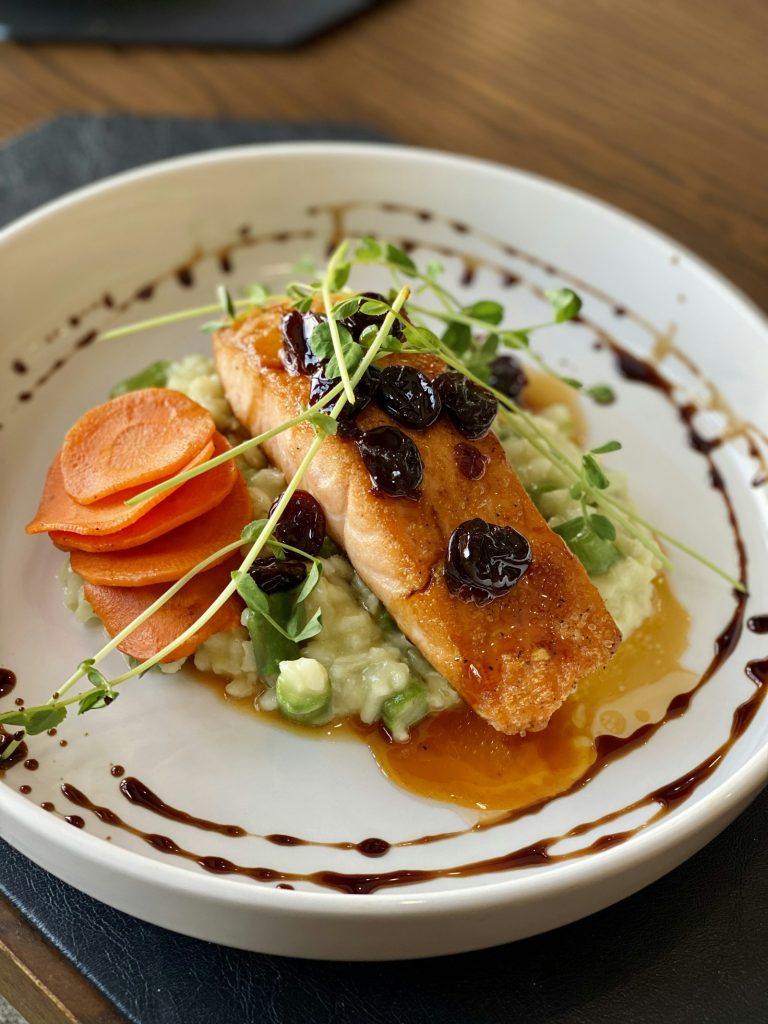
Why This Honey Garlic Salmon Works
Salmon is rich, so it pairs perfectly with a sweet and salty glaze. Honey adds caramelized sweetness, while soy sauce brings savory depth. Meanwhile, garlic and lemon keep the flavor bright rather than heavy.
The method matters too. Because honey burns quickly, the salmon is seared on its own first. Only then does the glaze go into the pan, where it bubbles and thickens in about two minutes. As a result, you get a crisp sear and a sticky coating without any bitterness.
Honey Garlic Salmon Ingredients
- Salmon fillets: Four 6-ounce fillets, skin on or off. Choose pieces of similar thickness so they cook evenly.
- Honey: Any mild honey works well.
- Soy sauce: Low-sodium soy sauce keeps the glaze from getting too salty. Alternatively, use tamari for gluten-free.
- Garlic: Four cloves, finely minced.
- Lemon juice and butter: Lemon adds brightness, and butter makes the glaze glossy.
How to Make Honey Garlic Salmon
The full measurements are in the recipe card at the end of this post. In short, here is the method.
1. Mix the glaze. First, whisk the honey, soy sauce, lemon juice, and garlic in a small bowl.
2. Season and sear. Next, pat the salmon very dry and season it with salt and pepper. Heat the oil in a large skillet over medium-high heat. Then cook the salmon, presentation side down, for 4 minutes without moving it.
3. Flip and glaze. After that, flip the fillets and reduce the heat to medium. Add the butter, then pour in the glaze. Simmer for 2 to 3 minutes, spooning the glaze over the salmon as it thickens.
4. Serve. Finally, garnish with sliced green onions and sesame seeds, and serve with rice and a green vegetable.
Tips for Perfect Honey Garlic Salmon
- Dry the fish well. Moisture stops browning, so pat the fillets with paper towels first.
- Do not move it too soon. Salmon releases from the pan once a crust forms. Therefore, wait until it lifts easily.
- Check doneness. The USDA recommends cooking fish to 145°F (63°C). Alternatively, look for flesh that flakes easily with a fork.
- Watch the glaze. Once it turns thick and syrupy, take the pan off the heat right away.
Oven and Air Fryer Options
Prefer hands-off cooking? Bake the salmon at 400°F (200°C) for 10 to 12 minutes, brushing on half the glaze before baking and the rest at the end. Similarly, you can air fry it at 390°F for 8 to 10 minutes. In both cases, simmer the leftover glaze in a small pan to thicken it before serving.
Frequently Asked Questions
Can I use frozen salmon for honey garlic salmon?
Yes. Thaw it overnight in the fridge, then pat it very dry before searing. Otherwise, it will steam instead of browning.
What sides go with it?
Steamed jasmine rice, roasted broccoli, green beans, and cucumber salad all pair well. In addition, garlic noodles make it a heartier meal.
How long do leftovers last?
Cooked salmon keeps for up to 3 days in the fridge. For best results, reheat it gently or enjoy it cold over a salad.
Final Thoughts on Honey Garlic Salmon
Ultimately, honey garlic salmon is proof that a healthy dinner can also feel like a treat. With just a few ingredients and 20 minutes, you can put a restaurant-style plate on the table.
Love seafood? Try our garlic butter baked shrimp or our lemon garlic butter mussels.
 AuthorEmma food bloggerDifficultyBeginner
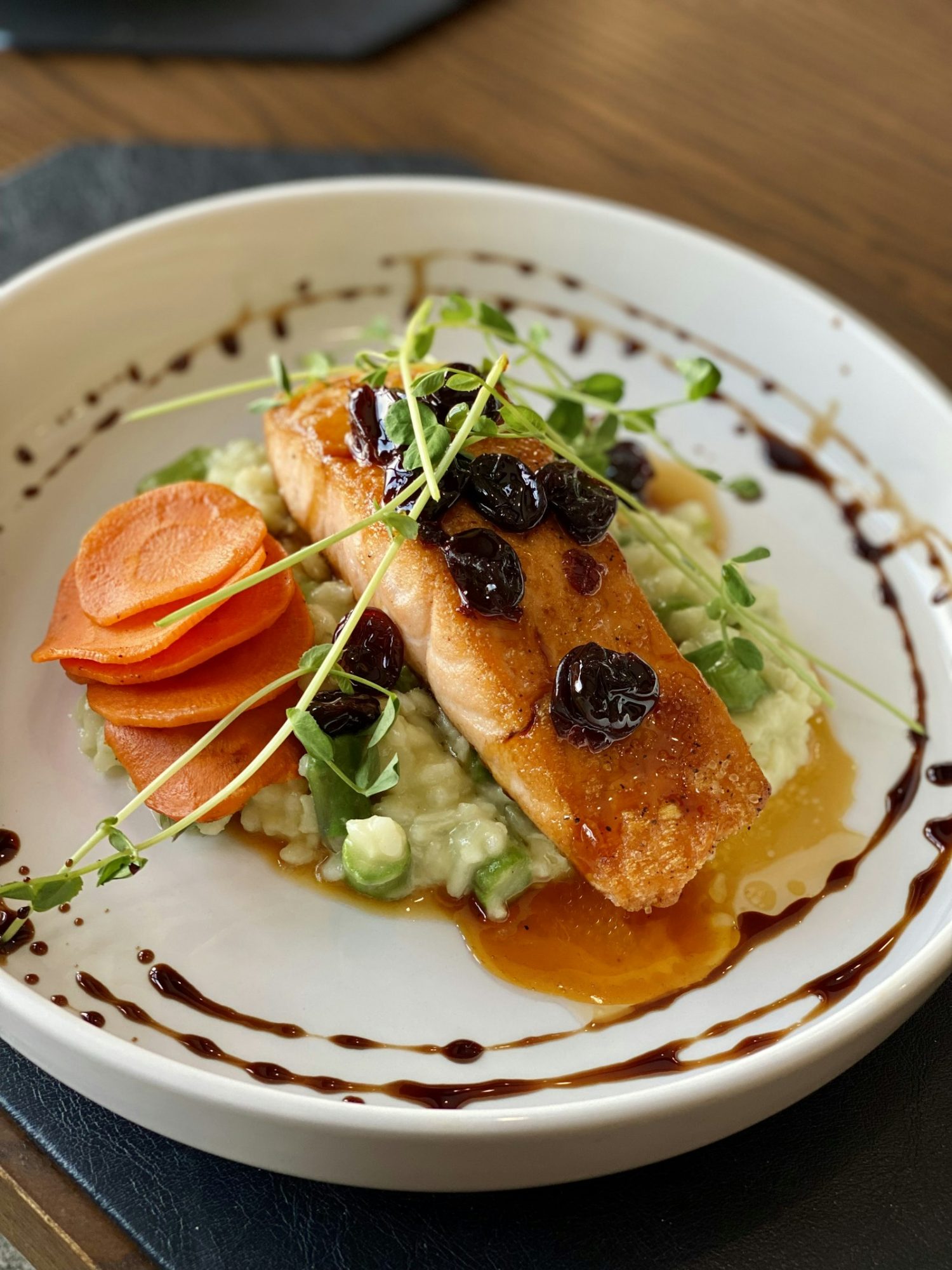
Pan-seared salmon fillets finished in a sticky honey, garlic, soy, and lemon glaze. Serves 4.
Honey Garlic Glaze
Salmon
Garnish
Mix the glaze. Whisk the honey, soy sauce, lemon juice, and garlic in a small bowl.
Season the salmon. Pat the fillets very dry and season with salt and pepper.
Sear. Heat the oil in a large skillet over medium-high heat. Add the salmon presentation side down and cook 4 minutes without moving, until golden.
Flip and glaze. Flip the salmon and reduce the heat to medium. Add the butter, then pour in the glaze.
Reduce. Simmer 2–3 minutes, spooning the glaze over the salmon, until it is thick and sticky and the fish reaches 145°F.
Serve. Garnish with green onions and sesame seeds. Serve with rice and vegetables.
4 servings
1 fillet
- Amount per serving
- Calories530
- % Daily Value *
- Total Fat 29g38%
- Saturated Fat 8g40%
- Trans Fat 0g
- Cholesterol 101mg34%
- Sodium 800mg35%
- Total Carbohydrate 25g10%
- Dietary Fiber 0g
- Total Sugars 24g
- Protein 35g
* The % Daily Value (DV) tells you how much a nutrient in a serving of food contributes to a daily diet. 2,000 calories a day is used for general nutrition advice.
Ingredients
Honey Garlic Glaze
Salmon
Garnish
Sources
- USDA Agricultural Research Service, Consumers Missing Out on Health Benefits of Seafood Consumption, August 2015
- NOAA Fisheries, Fisheries of the United States (2023 data)