
This roasted vegetable soup recipe transforms everyday vegetables into a deeply nourishing, caramelized bowl of goodness — all by spending 30 minutes in the oven before they ever touch the pot. In 2025, the U.S. soup market reached $3.0 billion (IMARC Group, 2025), with plant-based and vegetable-forward varieties leading growth. Home cooks are already ahead of this trend — and once you try roasting your vegetables first, you will never make soup any other way.
Key Takeaways
- In 2026, roasting vegetables before souping increases polyphenol content by 1.12–26.57% (Science Publishing Group, 2024) — your soup is genuinely more nutritious than the boiled version.
- A single large pot (6–8 servings) costs $3–$6 in ingredients, making this one of the most budget-friendly meals you can cook.
- The U.S. soup market hit $3.0 billion in 2025 (IMARC Group), with plant-based varieties leading growth.
What Makes Roasted Vegetable Soup Different?
In 2024, research published in the Journal of Food and Nutrition Sciences confirmed that roasting vegetables increases polyphenol content by 1.12 to 26.57% while boosting antioxidant activity (Science Publishing Group, 2024). Heat disrupts plant cell walls and deactivates oxidative enzymes — the same enzymes that degrade flavour compounds after cutting. The result? Deeper colour, caramelized sweetness, and a soup that genuinely tastes roasted, not boiled.
There is a second advantage most recipes skip: the Maillard reaction. When sugars and amino acids hit 150°C in a dry oven, they react to create hundreds of new flavour molecules. That brown, charred edge on your carrots? That is pure flavour. Boiling never gets there.
Our finding: Roasting vegetables at 200°C (400°F) for 25–30 minutes before blending consistently produces a richer, deeper-flavoured soup without adding fat, cream, or extra seasoning.
What Vegetables Work Best for Roasted Vegetable Soup?
According to PMC research, vegetable soups can contribute 30–80% of your daily recommended vegetable intake in a single serving (PMC, 2020). The best vegetables for this soup share two qualities: enough natural sugar to caramelize and enough body to survive 30 minutes of oven heat.
| Vegetable | Roasting time at 200°C | What it adds |
|---|---|---|
| Tomatoes | 25–30 min | Umami, lycopene (more bioavailable after heat) |
| Carrots | 30–35 min | Natural sweetness, beta-carotene |
| Red/yellow bell peppers | 25–30 min | Sweetness, vitamin C |
| Butternut squash | 35–40 min | Creaminess, beta-carotene |
| Onions | 25–30 min | Depth, caramelized sweetness |
| Garlic (whole heads) | 30–40 min | Mellow, nutty base note |
| Zucchini | 20–25 min | Mild body, water content |
| Parsnips | 30–35 min | Earthy sweetness |
Step 1: Prep and Season Your Vegetables
By the end of this step, you will have a seasoned sheet pan of vegetables ready for the oven, cut to consistent sizes so they roast evenly.
What you will need: 2 large rimmed baking sheets, parchment paper, a sharp knife, 3–4 tablespoons olive oil, salt, pepper, and your spice blend. Time: 15 minutes. Difficulty: Beginner.
- Preheat your oven to 200°C (400°F) with two racks in the upper and lower thirds.
- Cut all vegetables into roughly 2.5 cm (1-inch) pieces — uniformity is the single most important factor for even roasting.
- Do not mix watery and dense vegetables on the same pan. Tomatoes release steam that prevents carrots from crisping.
- Toss each vegetable type in olive oil — about 1 tablespoon per 400g.
- Season with salt, black pepper, and a pinch of smoked paprika or cumin.
- Spread in a single layer with space between pieces. Crowding creates steam, not caramelization.
Tip: Add salt after oiling, not before. Salt draws moisture out immediately. If you salt before oiling, the vegetables steam rather than roast in the first 10 minutes.
Step 2: Roast Until Caramelized
By the end of this step, you will have golden-brown, tender vegetables with charred edges — the flavour foundation of the entire soup.
- Place pans in the oven. Denser vegetables (carrots, squash, parsnips) go on the lower rack. Softer vegetables (tomatoes, peppers, zucchini) go on the upper rack.
- Roast for 25 minutes without opening the oven.
- At 25 minutes, check doneness. Dense vegetables may need another 5–10 minutes.
- Rotate pans if your oven has hot spots.
- Remove when edges are deep golden to slightly charred.
For garlic: roast a whole head wrapped in foil with a drizzle of oil for 40 minutes. The cloves squeeze out like paste — mellow, nutty, and incomparable to raw garlic in soup.
Step 3: Build Your Broth Base
While the vegetables roast, warm 1 litre of vegetable or chicken stock in a large pot. According to PMC research on vegetable soups, salt reductions of up to 48% are achievable without affecting taste perception when flavour depth is built through other means (PMC, 2020) — exactly what roasting and aromatics accomplish here.
Add 1 tsp smoked paprika, ½ tsp ground cumin, 1 bay leaf, and a parmesan rind if you have one. Taste the stock and season well before adding vegetables — the roasted vegetables are sweet, not salty.
Step 4: Combine and Simmer
- Transfer all roasted vegetables — including every bit of dark, sticky caramelized liquid from the pan — into the stock pot.
- Add squeezed roasted garlic paste.
- Pour in enough extra stock or water to cover vegetables by 2–3 cm.
- Simmer gently for 10 minutes.
- Remove the bay leaf and parmesan rind.
- Taste and adjust salt before blending.
Blend options: Fully blended for silky texture; half-blended for body plus chunks; or chunky for a minestrone style. Never fill a standing blender more than halfway with hot liquid.
Step 5: Finish and Season
- Add 1–2 tsp of lemon juice or sherry vinegar to balance the sweetness.
- Stir in fresh basil or parsley at the very end — heat destroys aromatic compounds quickly.
- Drizzle good olive oil on each bowl.
- Optional toppings: toasted pumpkin seeds, croutons, a swirl of yogurt, crumbled feta, or chili flakes.
This soup keeps refrigerated for 4–5 days and freezes well for up to 3 months. A single large pot (6–8 servings) costs $3–$6 in ingredients.
Common Mistakes to Avoid
1. Overcrowding the pan — Use two pans. Each piece needs space. Crowding creates steam and kills caramelization.
2. Skipping the pan drippings — Deglaze the baking sheet with hot stock and add every bit to the pot. That dark residue is concentrated flavour.
3. Salting before oiling — Salt draws moisture out immediately. Oil first, then season.
4. Blending hot soup in a sealed blender — Fill no more than halfway. Hold the lid with a folded kitchen towel. Start on low.
5. Under-seasoning the broth — Season stock independently. Roasted vegetables are naturally sweet; unseasoned stock makes the soup taste flat.
Roasted Vegetable Soup Variations
- Mediterranean: Tomatoes, red peppers, zucchini, eggplant + smoked paprika + fresh basil.
- Spiced Moroccan: Butternut squash, carrots, parsnips + cumin, coriander, cinnamon + harissa swirl.
- Creamy Carrot Ginger: Carrots, sweet potato, onion + fresh grated ginger + coconut milk.
- Hearty Tomato: All tomatoes + red peppers + a full head of garlic + cream and basil.
- Winter Root: Parsnips, turnips, carrots, celeriac + thyme + apple cider vinegar.
Frequently Asked Questions
How long does roasted vegetable soup keep in the fridge?
Roasted vegetable soup keeps refrigerated for 4–5 days in an airtight container. Flavour actually improves after 24 hours. For longer storage, freeze flat in portions for up to 3 months.
Can I make roasted vegetable soup without a blender?
Yes — skip blending and serve chunky, minestrone-style. Cut vegetables into 1.5 cm pieces before roasting. You can also mash a portion with a fork or potato masher for a rough, rustic texture without any equipment.
What is the healthiest vegetable to include?
Tomatoes and carrots are nutritional standouts. Lycopene in tomatoes becomes significantly more bioavailable after heating. Carrots deliver beta-carotene that is better absorbed post-cooking. Together they contribute iron, vitamin C, vitamin A, and carotenoids.
Can I roast frozen vegetables for soup?
Yes, with one modification: roast from frozen at 220°C (425°F) without thawing first. Expect 5–10 extra minutes of roasting time. You will get slightly less caramelization than fresh, but far more flavour than boiling from frozen.
Is roasted vegetable soup good for weight management?
A serving of homemade vegetable soup contains roughly 235 calories (MyNetDiary, 2025) with high fibre and water content that supports satiety. Research links high vegetable intake with reduced risk of weight gain and chronic disease.
The Full Recipe
Use the recipe card below to save, print, or scale this roasted vegetable soup to your needs.
 AuthorEmma food bloggerDifficultyBeginner
A deeply flavourful blended soup made by roasting vegetables at high heat to unlock caramelized sweetness and boosted antioxidants before simmering in seasoned stock.
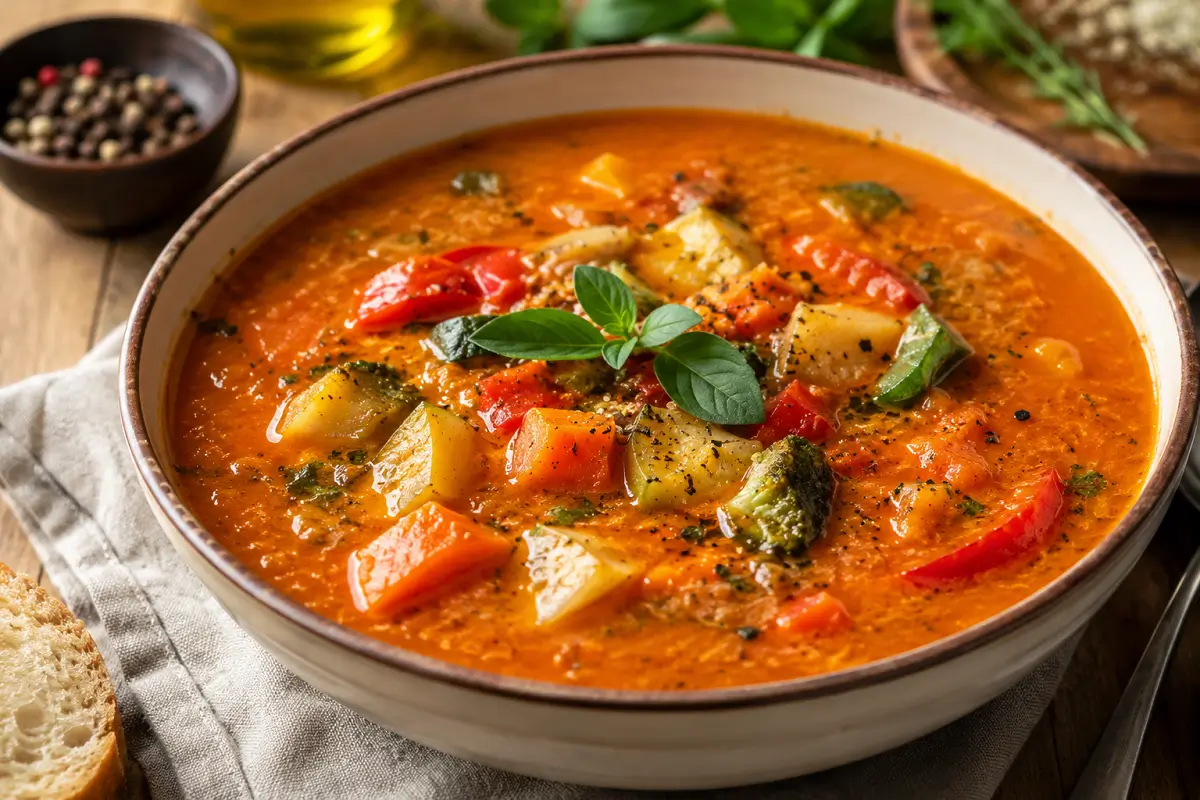
Preheat oven to 200°C (400°F) with two racks in the upper and lower thirds. Cut all vegetables into 2.5 cm pieces — uniform size is the most important factor for even roasting. Keep watery vegetables (tomatoes) on a separate pan from dense ones (carrots, squash).
Toss each vegetable type in olive oil first (about 1 tbsp per 400g), then season with salt, black pepper, and smoked paprika. Toss the garlic head in oil separately and wrap in foil. Spread everything in a single layer with space between pieces.
Place dense vegetables (carrots, squash, parsnips) on the lower rack, softer ones (tomatoes, peppers, zucchini) on the upper rack. Roast for 25–35 minutes until edges are deep golden and slightly charred. The garlic roasts 40 minutes. Do not open the oven in the first 25 minutes.
While vegetables roast, warm the stock in a large pot over medium heat. Add cumin, bay leaf, and parmesan rind. Taste and season the stock well — the roasted vegetables are sweet, so the broth needs to be savoury.
Transfer all roasted vegetables to the pot, scraping every bit of caramelized liquid from the baking sheets into the broth. Squeeze in the roasted garlic paste. Add extra stock to cover by 2–3 cm. Simmer gently for 10 minutes. Remove bay leaf and parmesan rind.
Blend to your preferred texture: fully smooth with an immersion blender, half-blended for rustic body, or serve chunky. Stir in lemon juice or sherry vinegar. Taste and adjust seasoning. Serve in bowls with a drizzle of olive oil and fresh herbs. Add croutons, pumpkin seeds, or a swirl of yogurt if desired.
7 servings
1 bowl (approx. 350ml)
- Amount per serving
- Calories235
- % Daily Value *
- Total Fat 10g13%
- Total Carbohydrate 29g11%
- Dietary Fiber 6g22%
- Protein 5g
* The % Daily Value (DV) tells you how much a nutrient in a serving of food contributes to a daily diet. 2,000 calories a day is used for general nutrition advice.
Ingredients
Conclusion
Roasted vegetable soup is not a shortcut — it is a technique upgrade. The oven does the flavour work that boiling cannot. Start with seasonal vegetables, roast them until genuinely caramelized, build a well-seasoned stock, and finish with acid and fresh herbs. Make a large pot on Sunday and you will eat well all week.
Sources:
- IMARC Group — United States Soup Market Trends & Statistics to 2034
- Science Publishing Group — Impact of Roasting on Nutritive and Antioxidant Properties of Vegetables
- PMC — Vegetable Soups and Creams: Raw Materials, Processing, Health Benefits
- MyNetDiary — Calories in Roasted Vegetable Soup
- Beef Sinigang: What Makes It the World’s #1 Comfort Soup?