
This pesto pasta coats spaghetti in a bright, fragrant homemade basil pesto made with pine nuts, garlic, parmesan, and olive oil. It is fresh, vibrant, and ready in about 20 minutes. The sauce has a long story behind it. Originally, pesto comes from Genoa in Liguria, and its name comes from the Genoese verb pestâ, meaning “to pound,” because it was traditionally made in a marble mortar (Wikipedia).
Key Takeaways
- Toasting the pine nuts deepens the flavor of the pesto.
- A splash of pasta water makes the pesto cling to every strand.
- Never cook pesto over high heat, or the basil turns dark and bitter.
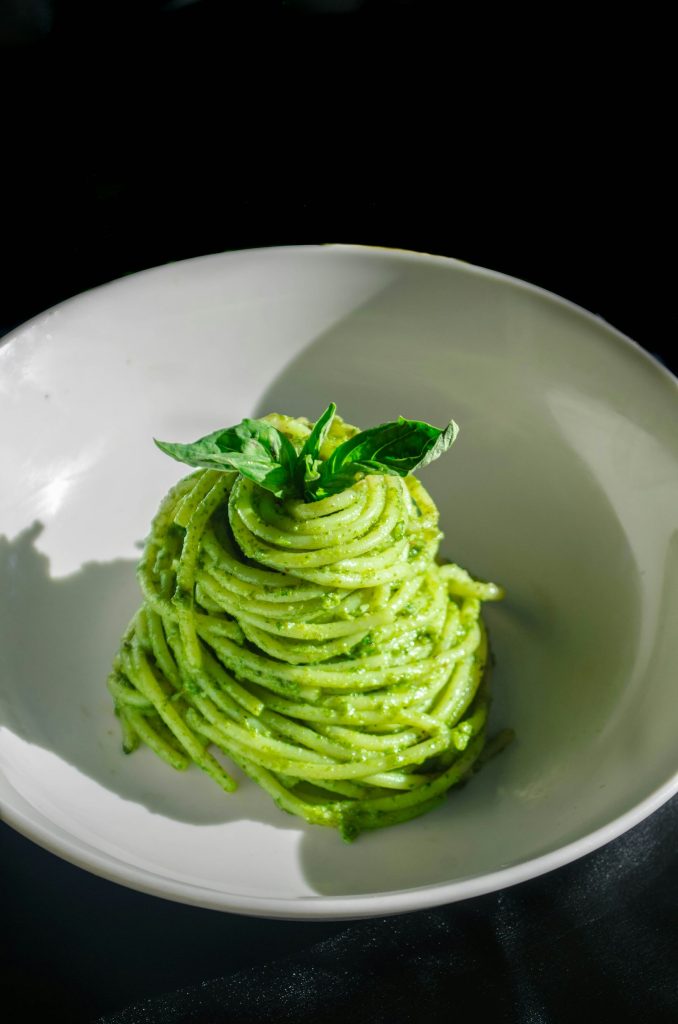
Why Make Pesto Pasta From Scratch?
Jarred pesto is handy, but it often tastes dull and oily. By contrast, fresh pesto is bright green and full of basil aroma. Moreover, it takes just 5 minutes in a food processor.
Better still, you can adjust it to taste. For example, add more garlic, more lemon, or a handful of spinach.
Pesto Pasta Ingredients
- Fresh basil: Above all, use plenty of bright, fresh leaves.
- Pine nuts: Toasted for a nutty depth. Alternatively, walnuts work well.
- Parmesan and garlic: Together, they add savory flavor.
- Extra-virgin olive oil: In addition, a little lemon juice keeps it bright.
- Spaghetti: Similarly, linguine or trofie are great choices.
How to Make Pesto Pasta
The full measurements are in the recipe card at the end of this post. In short, here is how it works.
1. Toast the nuts. First, toast the pine nuts in a dry pan for 2 to 3 minutes, until golden.
2. Blend the pesto. Next, pulse the basil, nuts, garlic, parmesan, and salt. Then stream in the olive oil and lemon juice until smooth.
3. Cook the pasta. Meanwhile, cook the spaghetti until al dente and reserve a cup of pasta water.
4. Toss. Finally, toss the pasta with the pesto off the heat, adding pasta water until glossy. Serve with extra parmesan and basil.
Tips for the Best Pesto Pasta
- Do not overblend. Otherwise, the heat from the blades darkens the basil.
- Add pasta water. In fact, it turns the pesto into a silky coating.
- Keep it green. For storage, cover the pesto with a thin layer of olive oil.
- Add vegetables. For example, cherry tomatoes, peas, or green beans pair beautifully.
Frequently Asked Questions
Can I make pesto pasta with store-bought pesto?
Yes. However, add a squeeze of lemon and fresh basil to brighten the flavor.
Can I freeze pesto?
Absolutely. Freeze it in ice cube trays for up to 6 months, and then thaw only what you need.
Is it good cold?
Definitely. In fact, it makes a great pasta salad with tomatoes and mozzarella.
Final Thoughts
Ultimately, homemade pesto pasta is one of the freshest, fastest dinners you can make. Once you taste it, jarred pesto will never compare.
For another quick pasta, try our spaghetti pomodoro, or start with our caprese skewers.
 AuthorEmma food bloggerDifficultyBeginner
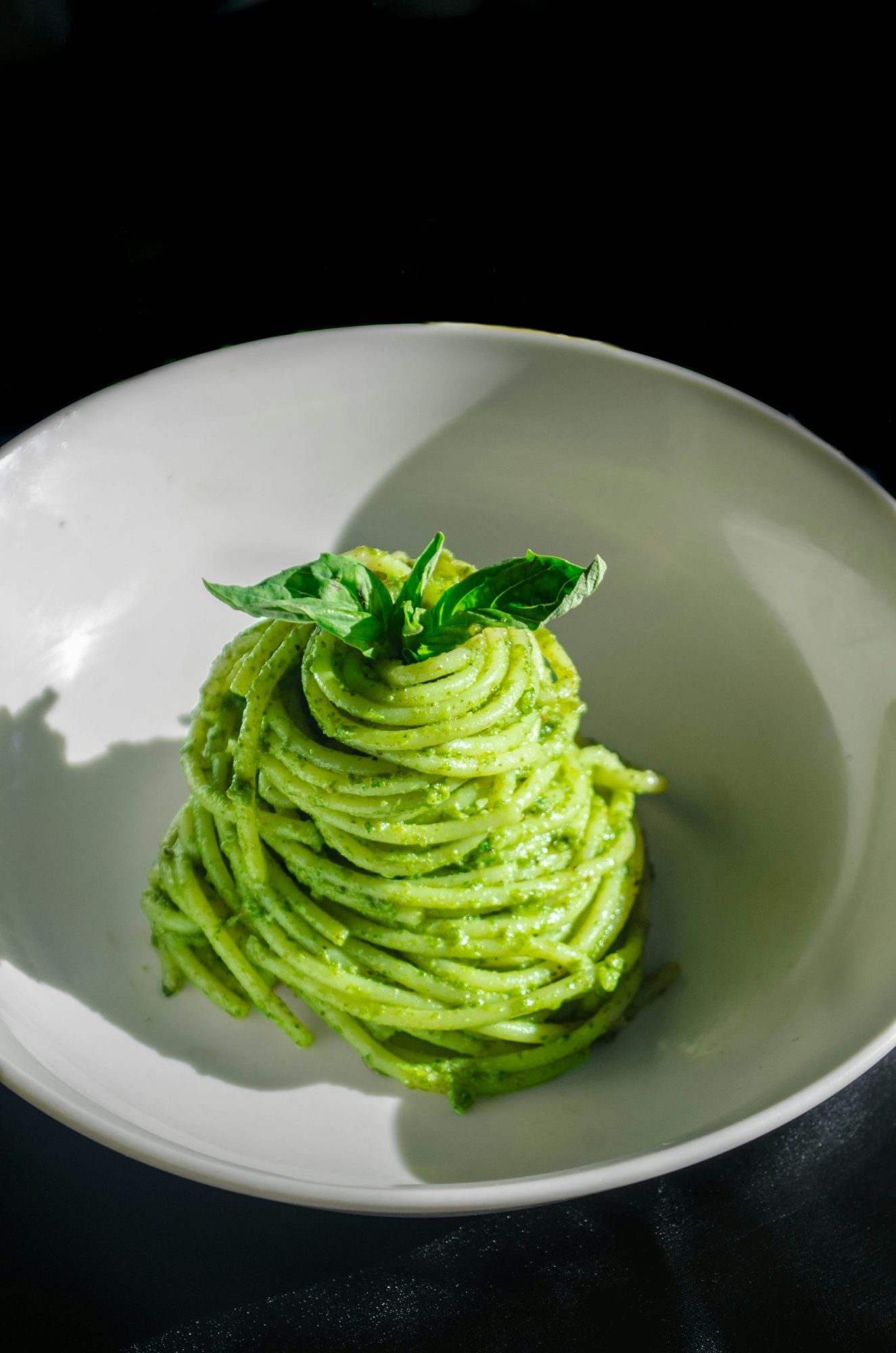
Spaghetti tossed with a fresh pesto of basil, toasted pine nuts, garlic, parmesan, lemon, and olive oil. Serves 4.
Pesto
Pasta
Toast the nuts. Toast the pine nuts in a dry pan 2–3 minutes until golden.
Blend the pesto. Pulse the basil, pine nuts, garlic, parmesan, and salt. With the motor running, stream in the olive oil and lemon juice until smooth.
Cook the pasta. Cook the spaghetti in salted water until al dente. Reserve 1 cup of pasta water and drain.
Toss. Off the heat, toss the pasta with the pesto, adding pasta water until glossy.
Serve. Top with extra parmesan and basil.
4 servings
1 plate
- Amount per serving
- Calories675
- % Daily Value *
- Total Fat 39g50%
- Saturated Fat 6g30%
- Trans Fat 0g
- Cholesterol 10mg4%
- Sodium 480mg21%
- Total Carbohydrate 64g24%
- Dietary Fiber 3g11%
- Total Sugars 3g
- Protein 17g
* The % Daily Value (DV) tells you how much a nutrient in a serving of food contributes to a daily diet. 2,000 calories a day is used for general nutrition advice.
Ingredients
Pesto
Pasta
Sources
- Wikipedia, Genoese basil sauce: history and ingredients